Running form: the Essentials
Running form: How to help your child run faster
Your child’s running style will naturally evolve as their bodies and coordination develop. If your child wants to run faster, there are a few techniques that you can teach them to help them improve their speed and running form.
Don’t expect your child to adopt these techniques immediately. However, by reinforcing their value, it will help them develop the muscle memory required to adopt a running form that encourages speed and reduces the likelihood of getting injured.
The foundations of a good running form
Running technique takes time to evolve, and is closely tied to practicing that technique in drills and games. There are five key elements to focus on:
Keeping a High knee lift
If you watch sprint or middle-distance runners at the Olympics, they keep their knees high. They do this because it allows them to plant their foot with more force, and so attain greater leg speed. In short, high knees means faster running.
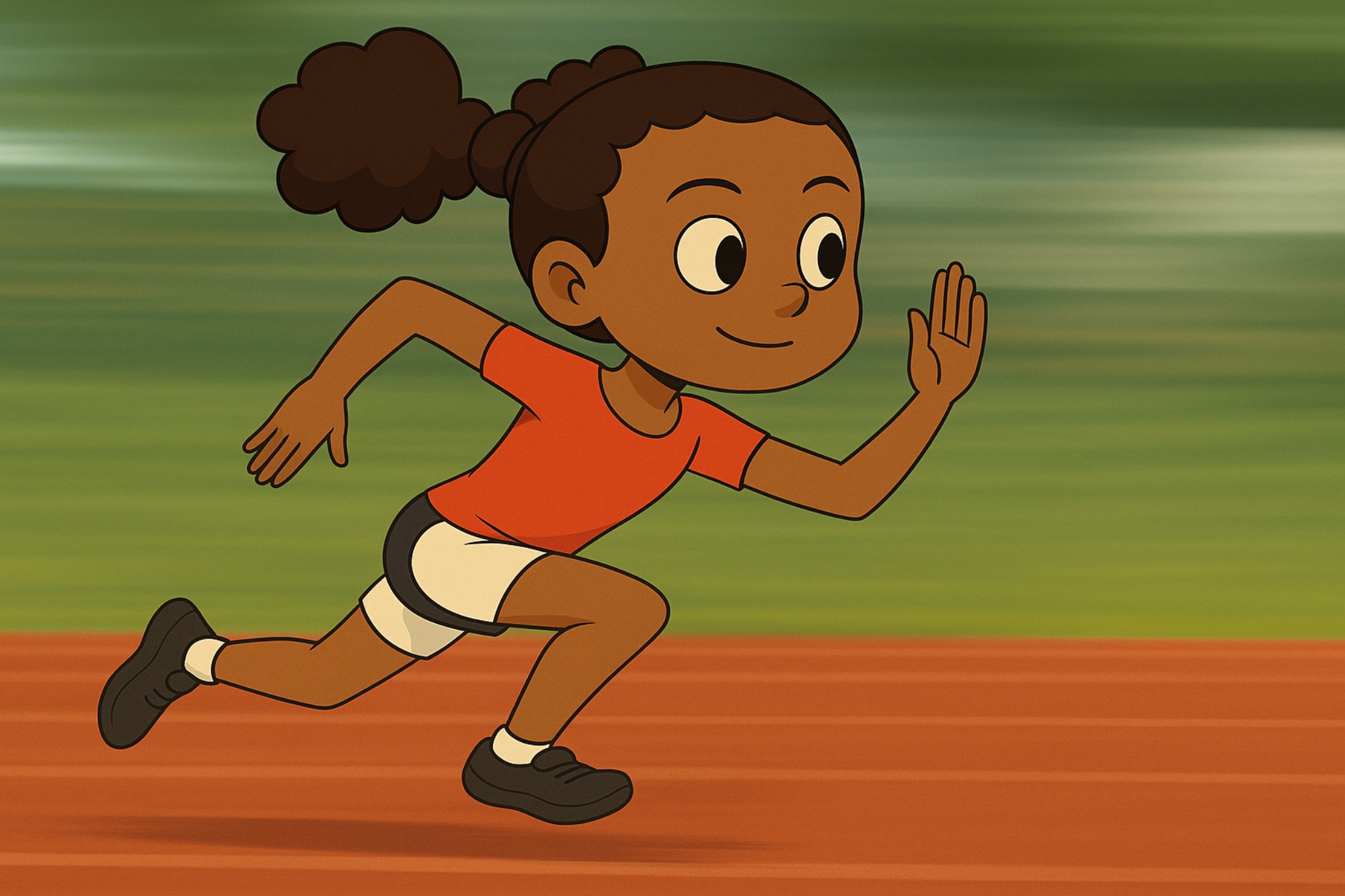
🏃♀️ Step one – marching: You can show your child how high their knee needs to be by asking them to march around like a soldier. If that doesn’t work, ask them to practice by walking up the stairs. Ideally, their thigh is almost parallel to the ground.
🏃♀️ Step two – running on the spot: The action of running with high knees might not feel natural to your child. That’s okay. Get them to run on the spot, bringing their knees up to almost 90°. They may be tempted to over-emphasize the movement and bring their knees up to their waist. If they do that, gently ask them to lower their knees.
🏃♀️ Step three – run with high knees: There are games to encourage this at home, but have them practice running with high knees. It’s okay if they don’t do it straight away. The important thing is they are learning the technique.
Driving the arms
Running might be a ‘leg’ sport, but the arms are crucial for any child who wants to run fast. The arms will move naturally with the body, but there are a couple of things that we want your child to remember.
🏃♀️ Keep the arms at 90°: Rather than having the arms by their side or bunched tight around their chest, we want them bent at around 90°. As an example, ask them to pretend that they have robot arms. Most kids will naturally put them at 90° in this scenario.

🏃♀️ Pump – but do not cross over the body: Your child’s arms will naturally coordinate with their legs when they run. Encourage them to pump their arms forwards and backwards, this will help drive their legs. Their hands should ideally pump from hip to chin height. We want these arms swinging straight forward, not crossing over their chest.
🏃♀️ Keep the hands relaxed: A relaxed runner is a fast runner. Ask your child to keep their hands relaxed and their fingers almost straight – we don’t want them balling up their fists!
Focus and posture
Every parent wants their children to have a good posture, and the desire to run fast is a good way of promoting it. Posture is essential for running, and all the top runners have excellent postures.
There are a few elements to their posture and focus that need to be considered.
🏃♀️ Shoulders back: We want your child to run ‘tall’ (even if they aren’t). Ask them to push their shoulders back, but make sure that they stay relaxed. Remember: a relaxed runner is a fast runner.

🏃♀️ Eyes forward: When children begin running, they will often look at the ground in front of them. As they develop, we want them to start looking ahead of themselves. You can practice this by asking them to run short distances while keeping their eyes on something: a target, a feature on a wall etc.
Optional extra: being a quiet runner
When children are learning the basics of technique, we don’t need to spend too much time worrying about stride length and patterns. The one thing to note is that children’s stride lengths are often shorter than adults’, so do not encourage them to overstride. Ideally, their feet will land just below their hips.
There are a couple of things that you can encourage your child to focus on, although knees, arms, and posture are the key elements for a good running form at this age.
🏃♀️ Aim for forefoot or midfoot running: We’ll look at footstriking in the next level, but try to push your child to land on their forefoot or midfoot. This promotes better running technique and fewer injuries.

🏃♀️ The importance of quiet running: All children run in different ways. Some are quiet, some stamp. Encourage your child towards the former. If they need help, tell them to imagine they are running like a ninja: fast but silently.
More sports
Gymnastics
Gymnastics is fun, easy to start, and great for kids’ strength, balance, and confidence.Basketball
Explore fun, effective basketball drills and training tips for kids and beginners. Help your child build skills, confidence, and love…