Running drills to try at home
Running Drills you can Do at home
One of the great things about running is that, with a little space, your child can practice running drills almost anywhere. While there are a lot of different ways to encourage your child to run, these three exercises will help them to practice their technique, develop their speed, and have fun at the same time.
Running Stretches for kids
Kids are kids and will run whether or not their bodies feel warmed up and ready. However, if you can encourage them to do a few simple stretches before they start, it will help them to stay injury-free and allow them to run faster.

🏃♀️ Stretch One – The thighs: Your child should stand on one leg (they can use a wall for support if it helps) and raise their foot up towards their bottom. They should feel a stretch at the front of their leg. Hold it for 20 seconds then change legs.
🏃♀️ Stretch Two—The calves: Your child should start with their feet shoulder-width apart. Ask them to take a step forward. They should keep both feet pointing forward, their back leg straight, and their heels pressed to the ground. They can put their hands on their front knee. They should feel a stretch in the calf. Hold for 20 seconds, then swap legs.
Running Drill One: Hold and Sprint
Goal: This drill combines technique, speed, and reaction training – the three ingredients every fast runner possesses.

How it works: You need a pre-defined start and end point about 20 meters apart. This can be anything: cones, a line on the floor, two trees. Start with your child running on the spot – ask them to focus on technique: Knees high, driving the arms, shoulders back, and eyes forward.
🏃♀️ Step one – Get ready: Have them jog slowly on the spot for five seconds. Remember: technique!
🏃♀️ Step two – Turn it up: They’re still running on the spot, but they’re doing it faster now. Hold them for five seconds again
🏃♀️ Step three – Go, go go! They sprint as fast as they can to the other side, trying to hold that technique.
Gamify it: Holding the steps for five seconds is just a guide. We don’t want them running on the spot for an excessive amount of time, but play with the timing. When it comes to launching them into the sprint, clap your hands to start them. Pretend to miss the clap once or twice and see if they false start. If they do, the exercise has to start over.
Running Drill 2: Agility test
Goal: Not only does this game test your child’s speed, but also their reactions and their agility.
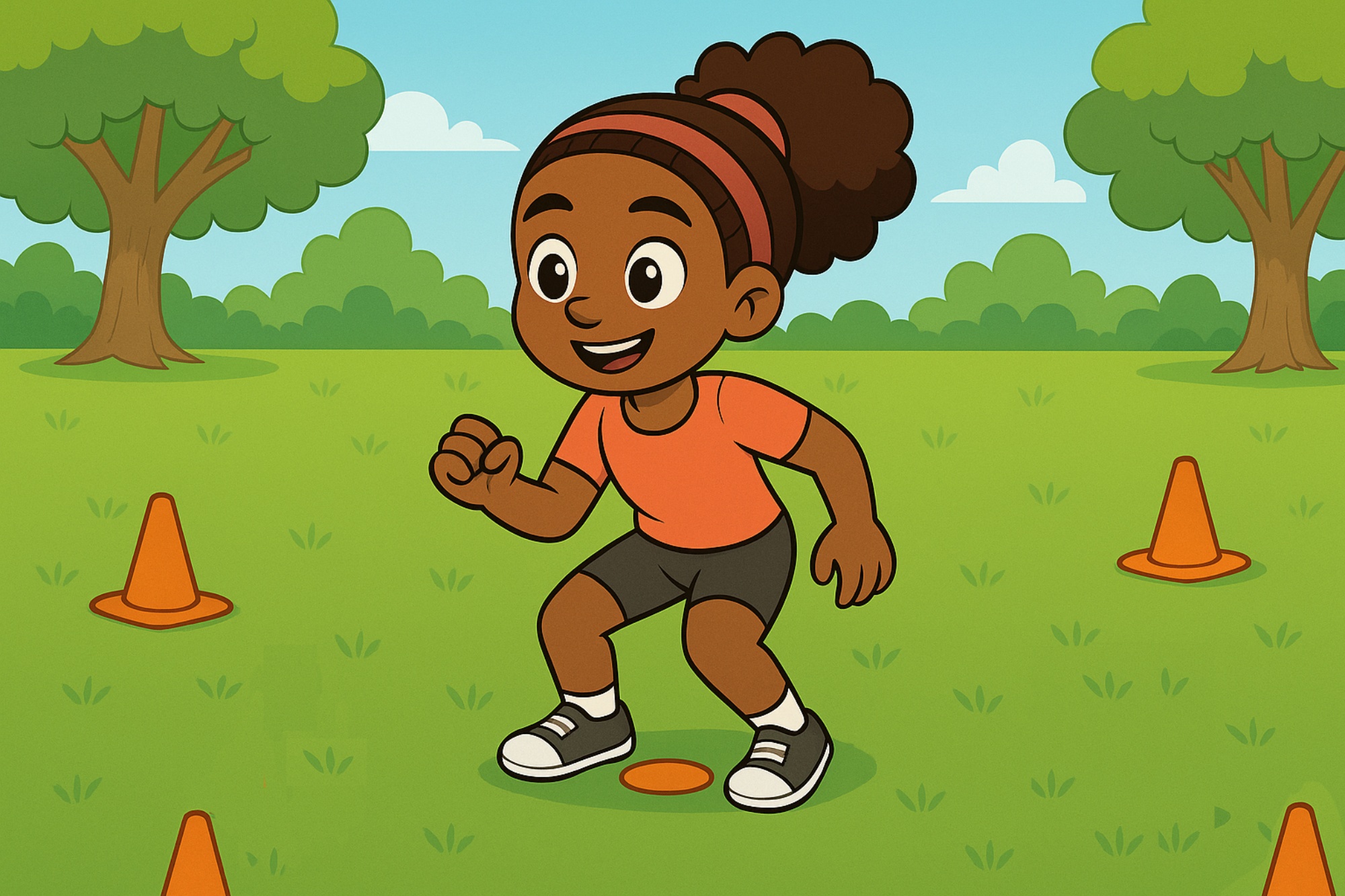
How it works: Place four markers in a square, approximately five meters apart. The markers can be anything – bottles, cones, clothes. Each marker needs to be different, or you can agree on a name for each of them that your child can easily recognise. Your child stands in the center of the square. When they are ready, you call out the name or number of a marker. Your child sprints to it, touches it, and then sprints back to the center. As soon as they are back in the center, call out the name or number of another marker.
Gamify it: Set them a time limit – 30 or 40 seconds is enough. See how many markers they can touch in that time. But remember: they always have to return to the center of the square.
Running Drill 3: Sprints
Goal: Sometimes it’s simply fun to run. This drill will encourage them to focus on their speed, nothing else. You can encourage proper technique with the promise that it will lead to faster times, but the most important thing is that they enjoy the sensation of running fast.

How it works: This is about as simple as it gets. You need a start line, a finish line, and a stopwatch. That’s it. If you don’t have a stopwatch, count the seconds out loud. Time them completing the course. When they have recovered, time them again. Don’t push them too hard, keep the mood fun, and congratulate them even if they run slower than their previous times. Do this drill properly, and your child will usually try their hardest again and again and again.
Gamify it: This drill is a game in itself. Keep a track of their fastest times at home and see if they can better it next time around. It’s amazing how competitive children can be with themselves.
more sports
Gymnastics
Gymnastics is fun, easy to start, and great for kids’ strength, balance, and confidence.Basketball
Explore fun, effective basketball drills and training tips for kids and beginners. Help your child build skills, confidence, and love…