Introduce your kid to Swimming
Never leave a child unattended near or in water — even for a moment — as it can result in drowning.
The How, What and Why of Swimming
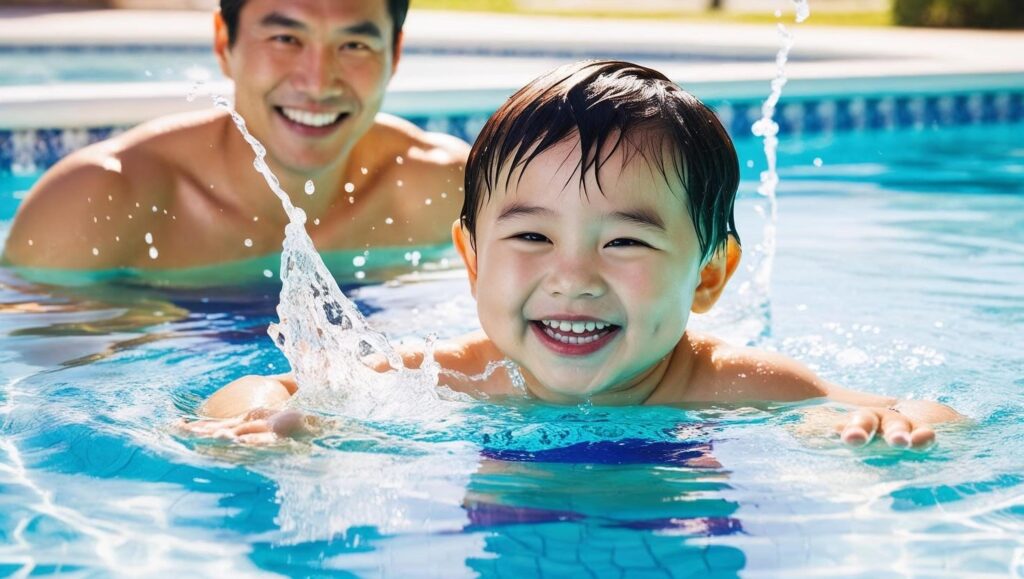
Learning to swim is about more than just sport. Being able to swim, even just a short distance, is a skill that could save your child’s life. Furthermore, the ability to swim will help your child develop confidence, enhance their motor coordination, balance, and muscle strength. And it’s fun! Think about long summer days by the pool or at the beach. Building your child’s comfort in the water will help them to participate fully in those days.
how to get your child comfortable in the water
Newborns are comfortable in water from birth, with some even displaying reflexes like holding their breath and attempting to swim when submerged (never try this). However, as newborns transition into toddlers, it is quite common for them to develop a fear of water. There are myriad reasons for that fear – the unknown, the warnings we give them, the smell of a swimming pool – the list is endless. The important thing is to help them overcome that fear. As parents, we do this by exposing them to the water in a playful, pressure-free, and positive way. Turning water time into fun time will build their trust, reduce their fear, and lay the foundation for learning to swim as they get more comfortable.

What is Swimming
The dictionary definition of swimming is to ‘propel the body through water using the limbs’. Tragically, not a lot of children can do this, and drowning is the leading cause of unintentional injury-related death amongst children in the USA aged 1-4. As such, you should never leave your child alone, either next to or in the water – accidents can occur in mere seconds.
Getting your child comfortable in the water is the first step in getting them comfortable with swimming. The age which children can learn to swim will vary from child to child, but as a broad guide, you can expect:
🏊 Ages 6 months to 3 years: Children at this age cannot swim independently. Instead, focus on water acclimation, floating with assistance, and blowing bubbles. Parent-and-child swim classes are excellent at this age for guided, safe exposure.
🏊 Ages 3 to 4: Children who are comfortable in the water may be able to begin doggie paddle or basic floating. However, they are not independent swimmers and need constant attention. It is crucial to use approved safety flotation devices at this age.
🏊 Ages 4 to 5: This is when children are developmentally able to swim short distances on their own. Children who are comfortable in the water at this age can sometimes doggie paddle 5-10 feet (3-5 meters), float on their back, and move independently along a swim wall.
🏊 Ages 6 and Up: Children at this age are developmentally able to swim multiple strokes independently. They are also at the right age to follow instructions in swim classes. However, they should never be left unattended in the water.
It is worth remembering that these are just guides. Some children learn to swim at an early age, while others learn later. The important thing is that you are helping them become safe swimmers.
Why Get your child into Swimming?
Learning to swim is, first and foremost, about safety. A child who is able to swim even a short distance may be able to get themselves out of a difficult situation. However, there are other developmental benefits to swimming,
The benefits of learning to swim
Water Safety and Drowning Prevention
Coordination
Muscle Strength
Balance
Social Participation
Fun Facts about Swimming
🏊 Swimming is one of the oldest forms of physical activity ever recorded, stretching back over 10,000 years.
🏊 Not all elite swimmers start as toddlers. America’s Cullen Jones began swimming lessons at the age of 5 after he nearly drowned at a water park. He went on to win Olympic gold in 2008 as part of the U.S. 4x100m freestyle relay team.
🏊 Swimming is one of the few sports that exercises your whole body — arms, legs, core, and even your back — all at once, without putting stress on your joints.
more sports
Gymnastics
Gymnastics is fun, easy to start, and great for kids’ strength, balance, and confidence.Basketball
Explore fun, effective basketball drills and training tips for kids and beginners. Help your child build skills, confidence, and love…