Karate: Essential skills
Karate: Four key skills
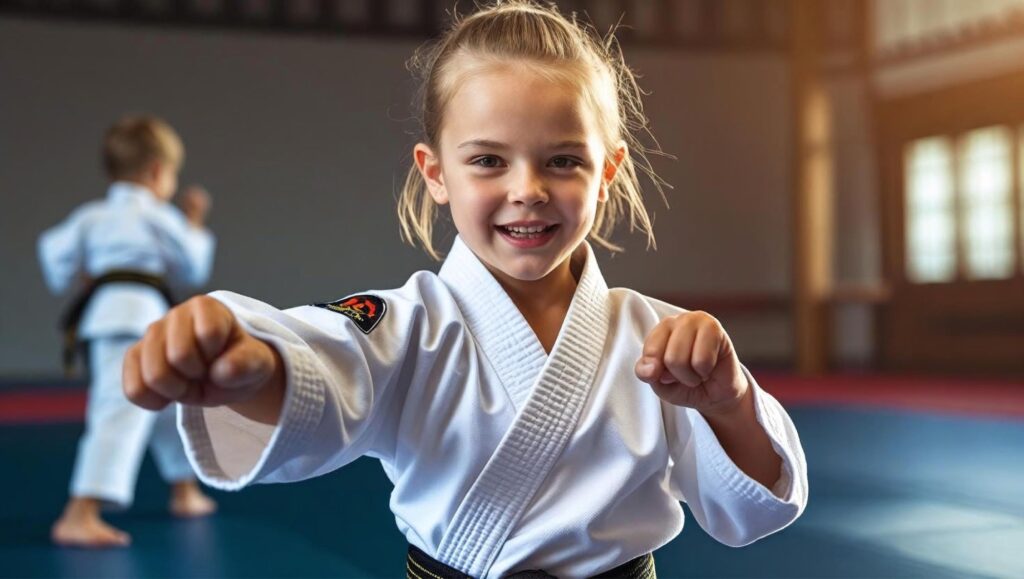
Your child is chomping at the bit to go to their first karate lesson, but they want to go prepared. Well, there are a few essential karate skills they can practice at home that will provide the foundation for everything that they will learn in a lesson. You don’t even need any special equipment to practice them.
First Things First: Adopting the Stance
When your child attends their first lesson, they will be introduced to karate stances. They will be asked to sit in seiza, where they kneel on the floor, and bow to one another in a rei. However, if they want to learn karate skills at home, it is helpful to learn heiko-dashi, or the natural stance.
Heiko-dashi is the stance many instructors will ask their students to stand in while they wait for instruction. It is also the stance that your child can use to prepare themselves for some of the skills that follow.

🥋 Step one: Ask them to put their feet shoulder-width apart.
🥋 Step two: Their arms should be by their side, slightly out from their body.
🥋 Step three: The back and neck should be straight.
🥋 Step four: They should start to focus, keeping their breathing calm and steady.
A child should never practice punching or kicking another child. These exercises should either be practiced in front of a mirror or with an adult who is holding a kick pad or focus mitts.
How to Do a Straight Punch (Choku Zuki)
Choju zuki is one of the first karate skills that every karate student learns. Learning how to perform choku zuki will help your child learn about coordination, balance, and how to generate power.
🥋 Step 1 – Adopt heiko-dashi: Ask your child to stand with feet shoulder-width apart in a natural stance. Have them bring their fists to their hips with knuckles facing up — elbows bent and close to the body.

🥋 Step 2 – Preparing to punch: The left hand should be straight out in front. The right arm should be at nearly 90°, resting against the ribs. The elbow should be below the height of the first. The fist of the right arm should be ready, but the palm should face up.
🥋 Step 2 – Punch: Two things are going to happen as they punch with their right arm:
1️⃣ The fist and forearm will start to rotate so that, by the time the arm is extended, the palm is facing the ground (in a natural punching position).
2️⃣ The left arm will pull back while the right arm moves forward so that it is prepared to punch (see Step 2).
Performing choju zuki correctly is not as easy as you might think. Have your child start slowly, practicing in front of a mirror. As they learn the correct technique they should start to speed up the movement.
🥋 Bonus tip: Encourage your child to yell “KIAI!” (a karate shout) when punching — it builds energy and confidence!
How to Do a Front Kick (Mae Geri)
The basic front kick, or mae geri, will help to teach your child balance, control, and proper posture. It’s a safe and fun kicking technique that kids love to practice once they get the hang of it.
🥋 Step 1 – Get into the right stance: Your child is going to stand with one foot forward, almost in a lunge position. For this drill, let’s say that they will be kicking with their right foot. Their hands should be by their side, balled up into fists.

🥋 Step 2 – Raise the knee: Ask them to bring their back leg forward, lifting their knee so that it is above their waist. They will be leaning back a little, balancing on their left leg. Their foot should be pointed forward, ready to ‘snap’.
🥋 Step 3 – Kick and return: Ask them to extend their right leg. At first, they should do this slowly, but as they master the move, they will increase the speed. The ball of the foot should point towards the object that they are trying to kick, and they keep their toes back (if they are using a mirror, then towards themselves).
🥋 Step 4 – Back to stance: When they have kicked out, they should bring their foot back to the Raised Knee position (Step 2). From there, they can place their foot back on the ground.
Bonus tip: If your child enjoys learning this skill, it is worth investing in a kick pad. This not only gives them something to aim at, but also gives you a bit of protection from a direct hit!
How to do a karate bow (Rei)
Karate teaches children about much more than punching and kicking. It also teaches them the importance of respect. At the core of this is the bow, known as the Rei. The Rei might not be difficult to master, but it is important. The rei signifies respect and focus – values that lie at the heart of martial arts. The bow is completed at the beginning and end of practice and sparring (kumite), and also to show appreciation.

🥋 Step one – Stand tall: Feet together, arms by the side, fingers straight. This is called musubi dachi.
🥋 Step two – the bow: Ask your child to gently bow forward from the waist (to an angle of about 30 degrees). They should keep their eyes down and their back straight. Their hands should stay at their sides.
🥋 Step three – return: They do not need to hold the bow for a long time. A short pause will suffice.
More sports
Gymnastics
Gymnastics is fun, easy to start, and great for kids’ strength, balance, and confidence.Basketball
Explore fun, effective basketball drills and training tips for kids and beginners. Help your child build skills, confidence, and love…